English

English


Key Takeaways
- The Chao Phraya River, known as Thailand's River of Kings, links several of Bangkok's most important temples within easy reach of one another.
- Temple-hopping by boat is affordable, scenic and accessible to all visitors, using the tourist boat, express boat or cross-river ferries.
- The headline sights are Wat Arun, Wat Pho and the Grand Palace with Wat Phra Kaew, plus quieter gems like Wat Prayoon and Wat Kalayanamit.
- A smart visiting order is the Grand Palace first, then Wat Pho, finishing with sunset at Wat Arun.
- Dress codes are strict at all temples, so cover shoulders and knees and carry a back-up scarf.
- Chatrium Hotel Riverside Bangkok makes an ideal base, with a complimentary shuttle boat for direct river access.
Table of Contents
- A Guide To The Best Temples Near Chao Phraya
- How to Get There by River
- Must-Visit Temples Along the River
- Wat Arun (Temple of Dawn)
- Wat Pho (Wat Phra Chetuphon)
- Wat Phra Kaew and the Grand Palace
- Wat Prayoon (Wat Prayurawongsawas)
- Wat Kalayanamit
- Tips and Tricks for Visiting
- Stay At Chatrium Hotel Riverside Bangkok For The Best Access
- Discover Bangkok’s Soul From the River
- Frequently Asked Questions
There is no better introduction to old Bangkok than the temples near Chao Phraya, the great waterway long known as Thailand's River of Kings. For centuries this river was the city's main highway, and the most important attractions near Chao Phraya, Bangkok still line its banks, from glittering royal temples to quiet riverside shrines. Approaching them by boat is the way visitors have done it for generations.
This guide is built as a temple-hopping journey by water, accessible to anyone regardless of budget or mobility. The beauty of the temples in Chao Phraya is how close together they sit. Within a short stretch of river you can step off at one pier, explore a centuries-old temple, then hop back on and be at the next within minutes. It is one of the most rewarding ways to spend a day in Bangkok.
How to Get There by River
The river network is simpler than it first looks, and once you understand the piers and boat flags, the whole riverside opens up. For anyone wondering about temples accessible by Chao Phraya express boat, almost all the major sights have a pier within walking distance.
Your main hub is Sathorn Pier, also called Central Pier, which connects directly to the BTS Skytrain at Saphan Taksin Station. From here you have a few options. The Chao Phraya Tourist Boat, marked with a Blue Flag, runs daily at roughly 30-minute intervals and works as a hop-on hop-off service, with commentary and stops at the main tourist piers. For budget travel, the Chao Phraya Express Boat with an Orange Flag is cheaper and runs frequently on weekdays, though it stops at more piers and is busier with commuters. To reach Wat Arun, you take a short cross-river ferry from Tha Tien Pier, a quick and inexpensive hop to the western bank.
If you plan several stops, consider buying a day pass at Sathorn Pier, which gives unlimited rides on the tourist boat and is good value for a full day of temple-hopping. As a base, our hotel in Bangkok offers a complimentary shuttle boat to the Saphan Taksin BTS and ICONSIAM, so guests can join the river network with ease.
Must-Visit Temples Along the River
Wat Arun (Temple of Dawn)
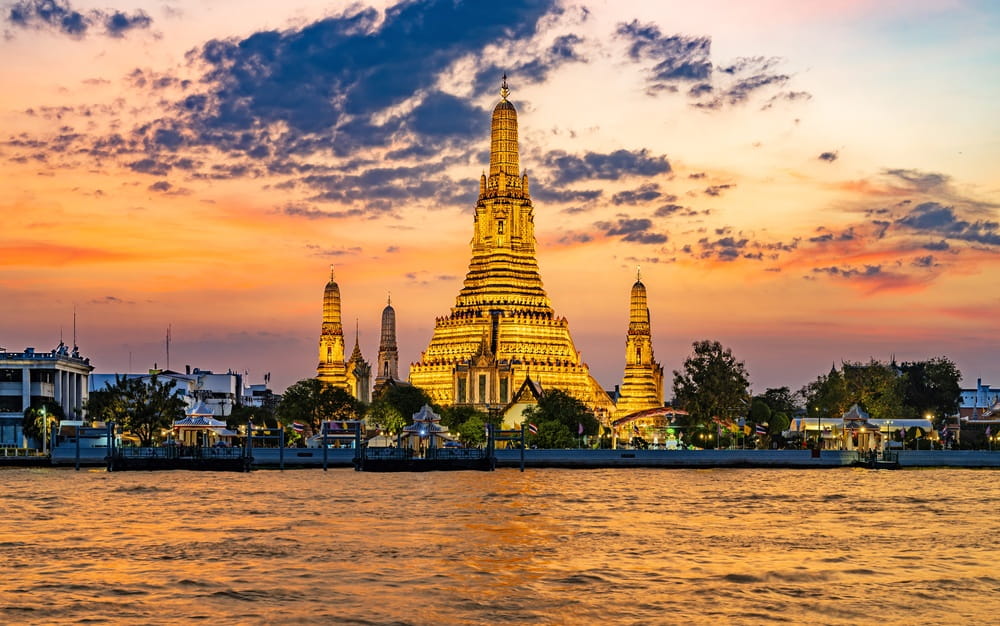
Rising straight from the western bank, Wat Arun is one of the most iconic temples near Chao Phraya and also the most photogenic. Its towering Khmer-style central prang is decorated with countless pieces of Chinese porcelain and seashells, which catch the light beautifully at dawn and dusk. Dating to the Ayutthaya period, the temple is named after Aruna, the Hindu god of dawn.
The best way to arrive is via the cross-river ferry from Tha Tien Pier, where the approaching view of the spires from the water is a highlight in itself. Entrance is 200 THB and the temple is open daily from 8 am to 6 pm. Note that access to the upper levels of the central prang can be restricted, so check conditions on arrival.
Wat Pho (Wat Phra Chetuphon)
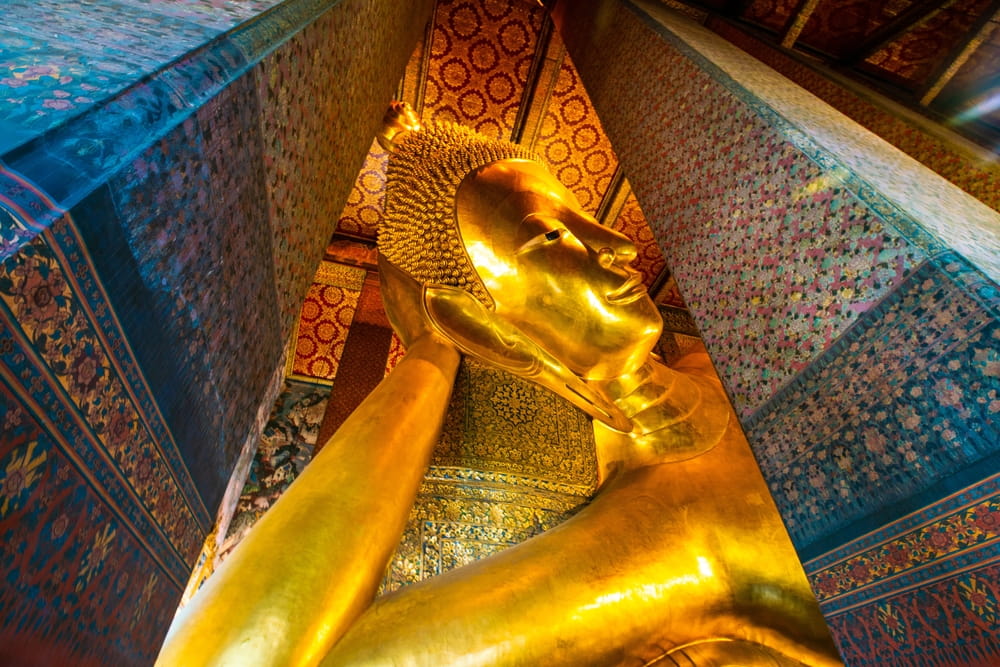
A short ferry hop back to the eastern bank brings you to Wat Pho, home to the magnificent 46-metre Reclining Buddha, its feet alone inlaid with intricate mother-of-pearl. As the royal temple of the First Reign of the Rattanakosin Kingdom, it is one of the city's oldest and most significant temples.
The grounds also hold the Four Royal Pagodas and the site widely regarded as the birthplace of traditional Thai massage, which is still taught and practised here. Disembark at Tha Tien Pier for a short walk to the entrance. Admission is 300 THB and the temple is open daily from 8 am to 6.30 pm.
Wat Phra Kaew and the Grand Palace
A little further north stands the Grand Palace, and within it Wat Phra Kaew, which houses the revered Emerald Buddha, also one of Thailand's most popular temples in Chao Phraya and considered a sacred place. This is the official royal temple, still used for important royal ceremonies, and its dazzling architecture is among the finest in the country.
Entrance is 500 THB, and the complex is open daily from 8.30 am to 3.30 pm, with the dress code strictly enforced. Because it closes earlier than the other temples, it makes sense to visit here first.
Wat Prayoon (Wat Prayurawongsawas)
Across on the Thonburi side, Wat Prayoon offers a quieter, more local experience. Built during the reign of King Rama III, its centrepiece is the striking white Phra Borommathat Maha Chedi, which earned a UNESCO Award of Excellence for Cultural Heritage Conservation in 2013. To reach it, disembark near the Memorial Bridge Pier and walk across the bridge, taking in the riverside views along the way.
Wat Kalayanamit
Nearby sits Wat Kalayanamit, also built during the reign of King Rama III. It is home to "Luang Pho To", a vast and revered seated Buddha image believed to ensure safe travels and lasting friendships, which makes the temple a popular stop for those about to take a journey. The temple also features Thailand's largest bronze bell, housed in its own dedicated bell tower.
Tips and Tricks for Visiting
Here’s a few tips and tricks to help make your trip to the temples near Chao Phraya more memorable and comfortable.
For timing, aim to start early at around 8 am for cooler weather and clearer photos, or save the late afternoon for golden hour at Wat Arun. On dress, shoulders and knees must be covered at all temples, which means no tank tops, shorts or mini-skirts. Slip-on shoes are the most practical choice, since you will remove them repeatedly when entering halls.
A few points of etiquette go a long way. Never point your feet at Buddha images, and women should avoid physical contact with monks. Inside the prayer halls, flash photography and tripods are often prohibited, so look for signage. For your route, visit the Grand Palace and Wat Phra Kaew first since they close at 3.30 pm, then move on to Wat Pho, and finish with sunset at Wat Arun. Finally, carry a light scarf or sarong as a back-up cover-up, which doubles as sun protection through the day.
Stay At Chatrium Hotel Riverside Bangkok For The Best Access
For a temple-hopping trip built around the river, it helps to stay on the water itself. Chatrium Hotel Riverside Bangkok is a five-star riverfront hotel on Charoenkrung Soi 70, perfectly placed for exploring the temples by boat.
A complimentary shuttle boat connects guests directly to the Saphan Taksin BTS and ICONSIAM, giving you straightforward access to the wider river network. The hotel offers 396 spacious rooms and suites, many with floor-to-ceiling windows and private balconies overlooking the Chao Phraya. After a day on the river, onsite dining covers every mood, from Thai, Chinese and international dishes at River Barge, to contemporary Cantonese fine dining at Silver Waves by Boon, to sundowners at the Cloud 36 rooftop bar. For travellers planning to explore the temples by river, our hotel in Bangkok is an ideal base.
Discover Bangkok’s Soul From the River
Arriving at a 200-year-old temple by boat, stepping off the water and into a courtyard of golden spires, is an experience that stays with you. The temples in Chao Phraya reward slow exploration, and seeing them from the river ties the whole day together in a way no taxi ride can match.
Ready to explore Bangkok's River of Kings? Plan your temple-hopping stay at Chatrium Hotel Riverside Bangkok and let the river be your guide.
Disclaimer: Opening hours, entrance fees and access conditions for temples and river services can change, and some sites close for religious ceremonies or royal events. This blog is intended as a general guide only. Always check the latest information on official sources before your visit.
References:
- Wat Arun Bangkok 2026: Entrance Fee, Opening Hours, Dress Code. Retrieved June 3, 2026, from:https://www.tripthaitour.com/blog/wat-arun-temple-of-dawn-bangkok
- Visit the Grand Palace: How to see the Emerald Buddha in 2026. Retrieved June 3, 2026, from:https://www.timetravelturtle.com/thailand/visit-grand-palace-bangkok/
- Discover the Majestic Temples of Bangkok Along the Chao Phraya River. Retrieved June 3, 2026, from:https://sawasdee.thaiairways.com/discover-the-majestic-temples-of-bangkok-along-the-chao-phraya-river/
Frequently Asked Questions
Q: How to visit Wat Arun and Wat Pho in one day?
A: Visiting Wat Arun and Wat Pho in one day is easy because the two sit on opposite banks of the river, linked by a short cross-river ferry from Tha Tien Pier. A popular plan is to see Wat Pho in the morning, then take the ferry across to Wat Arun in the late afternoon for golden hour. Both are open daily, and the ferry between them takes only a few minutes.
Q: Which temples are accessible by Chao Phraya express boat?
A: Most of Bangkok's riverside temples are accessible by Chao Phraya express boat. Wat Pho and the Grand Palace are a short walk from Tha Tien Pier, Wat Arun is reached by cross-river ferry from the same pier, and Wat Prayoon and Wat Kalayanamit are accessible from piers on the Thonburi side. A tourist boat day pass makes hopping between them simple.
Q: Do I need to pay an entrance fee for each temple?
A: Yes, most major temples charge a separate entrance fee, and prices vary by site. The Grand Palace is the most expensive, while Wat Arun, Wat Pho and others charge smaller individual fees. Some smaller temples are free or request a small donation. Always carry cash, as not all sites accept cards.
Q: What should I wear to visit Bangkok's temples?
A: All temples enforce a modest dress code, requiring shoulders and knees to be covered. Avoid tank tops, shorts, mini-skirts and see-through clothing. The Grand Palace has the strictest rules of all. Carrying a light scarf or sarong is a smart back-up, and some temples loan or rent cover-ups at the entrance.
Q: What is the best time of day to go temple-hopping?
A: Early morning, from around 8 am, is ideal for cooler temperatures, smaller crowds and clearer photos. Late afternoon is best for sunset views at Wat Arun. Since the Grand Palace closes by mid-afternoon, start there first, then work your way towards Wat Arun for the end of the day.
Q: How many temples can I realistically see in one day?
A: Three to five is comfortable if you plan your route by pier. Many visitors combine the Grand Palace, Wat Pho and Wat Arun as the core trio, then add quieter temples like Wat Prayoon and Wat Kalayanamit on the Thonburi side if time allows. Spacing them out keeps the day enjoyable rather than rushed.