

How Phuket's southern shore does seafood
Key takeaways:
- Southern Phuket's seafood tradition starts with the morning catch and ends on the table a few hours later, with little in between.
- The local seafood market runs on a simple process: pick what you want from the ice, pay by weight, and have it cooked across the road.
- Southern Thai cooking keeps preparations short, leaning on nam jim, charcoal, turmeric, and the natural sweetness of the catch.
- Family-run seafood restaurants further along the waterfront offer a quieter alternative to the market, with the same local sourcing.
- The area's dining character is shaped by proximity to the boats, not by the number of options on the menu.
Table of contents:
- How the market on the beach road works
- What makes southern Phuket seafood unique
- Quieter sit-down options along the shore
- Dining at Chatrium Phuket Rawai
- Frequently asked questions about Phuket seafood on the southern shore
Skip the tourist traps and experience southern Phuket; local boats dictate the menu, and the daily catch arrives before the kitchens even open. Rawai represents the quieter, authentic side of the island, anchored by a traditional fishing village. If you came to the southern shore specifically for world-class, fresh-off-the-boat seafood, you are exactly where you need to be.
How the market on the beach road works
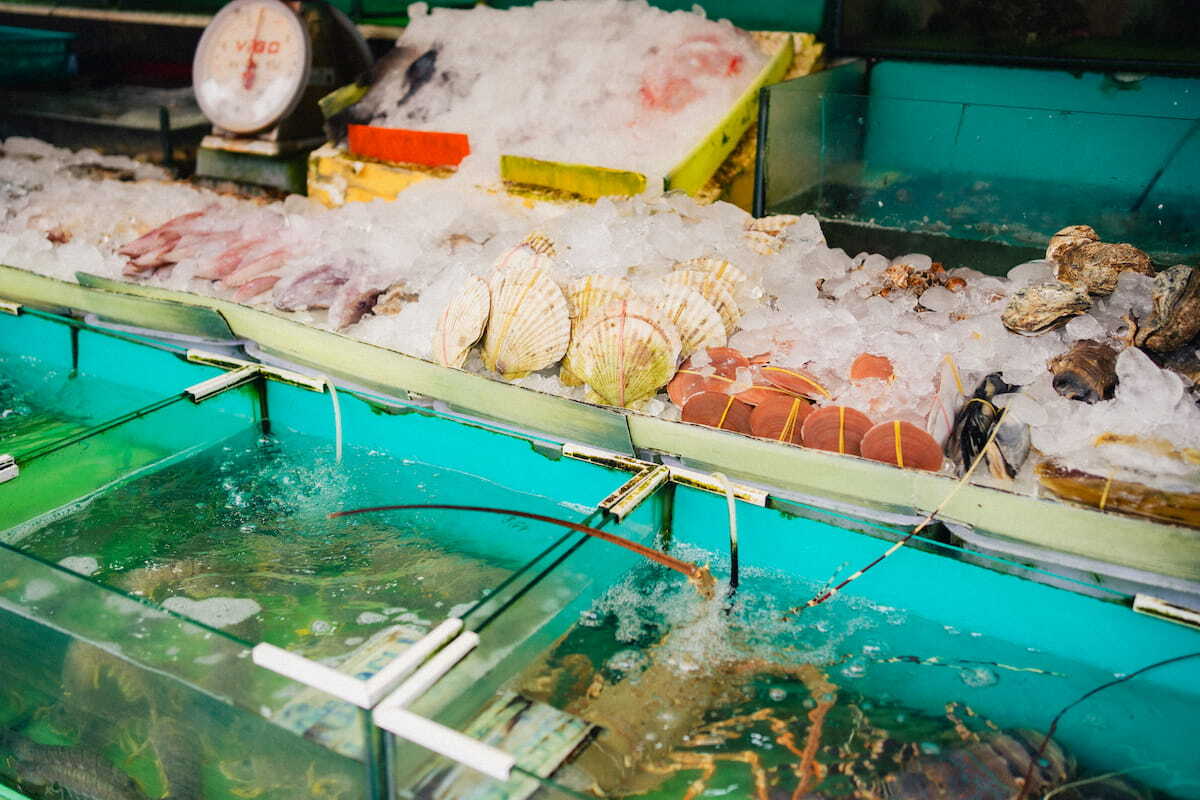
The Rawai seafood market in Phuket runs along the waterfront on the beach road, with stalls displaying tiger prawns, mud crab, squid, rock lobster, snapper, and reef fish on ice. Prices are listed by weight at each stall as a starting point, with some room to negotiate when you're buying several items.
By 17.30, the stalls fill with locals, visiting families and a handful of restaurant buyers picking up supplies, and a short comparison between two or three vendors is the easiest way to get a feel for the going rate and, often, a better price when buying in volume.
The seafood market at Rawai Beach works like this:
- Choose your catch. Select what you want from the stalls and pay the vendor by weight.
- Cross the road. Take your raw seafood to one of the open-air restaurants directly opposite.
- Select your style. Pay a cooking fee by weight and tell the kitchen how you'd like it prepared.
Once your order is in, most meals reach the table within about half an hour. The restaurants opposite tend to be small and family-run, with some open-air and others air-conditioned, and most kitchens are visible from where you sit, so you can watch the catch being cooked. The atmosphere changes as the day progresses: lunchtime brings a quieter calm, while evenings buzz with noise and activity, resembling the lively vibe of a night market. In any case, most places are accustomed to managing groups of various sizes with ease.
On a first visit to a seafood market in Phuket, confirm both the purchase price and the cooking fee upfront, and bring cash. Most vendors are happy to recommend a mix of portion sizes for a group, which makes ordering for several people a lot easier.
What makes southern Phuket seafood unique
Phuket seafood on the southern coast relies on bright acidity, local herbs, and quick cooking over high heat. Nam jim seafood sauce, made with lime, garlic, bird's eye chilli, and fish sauce, is the standard dip for anything grilled or steamed.
The dishes follow suit, with a short, familiar range of preparations that highlights the natural sweetness of the catch:
- Turmeric whole snapper: Rubbed with turmeric and salt, then cooked over charcoal for a golden finish.
- Pla rad prik: A whole fish fried crisp and served with a sweet, sour, and spicy sauce.
- Garlic and pepper prawns: Flash-fried with garlic and black pepper.
- Steamed cockles: Served hot alongside fresh chilli jam.
The same dishes also turn up at the quieter restaurants along the shore, prepared by cooks who've worked with the local catch for years.
Quieter sit-down options along the shore
For visitors looking for the best seafood in Rawai, Phuket beyond the market stalls, the family-run seafood restaurants further along the Rawai waterfront offer a more settled pace. These smaller venues typically source from the same local fishermen, with full table service and daily specials shaped by what came in that morning.
Many are run by local families, with the day's catch often laid out on ice near the entrance and open kitchens visible from the dining area. A few have been going for decades, which shows how little needs to be said when you order.
Prices generally fall between those of market and resort dining, while the peaceful atmosphere invites diners to savour their meals leisurely instead of hurrying. Outside the busiest holiday weeks, reservations are generally unnecessary, though the hum of conversation and a brief wait during peak evenings is common.
During the green-season rain, these restaurants provide a cozy, sheltered option away from the open-air market, still maintaining the authentic local quality.
Dining at Chatrium Phuket Rawai
For evenings when staying close to the resort feels right, Chatrium Phuket Rawai carries the same cooking tradition into a quieter setting. The fishing village and Promthep Cape are both close by, which keeps the evening's character in step with the island's quieter side. Afternoons settle slowly here, and evenings keep an easy pace of their own. The team tends to the practical details before you have to ask, which lets the evening settle around the meal itself.
If you're looking for a seafood restaurant in Rawai, Phuket, that pairs fresh local seafood with an unhurried setting, the resort's dining stays close to the southern Thai tradition:
- AuJaan: Island heritage recipes and Thai classics balancing sweet, salty, cooling and warming flavours.
- Lamoon Beach Lounge: Fresh catch from local waters, grilled over a wood-fired oven in a poolside setting.
- Kalui Kid's Bar: A calm, welcoming space for younger guests, with a playful selection of creative mocktails, refreshing drinks and locally inspired elixirs, thoughtfully crafted for little taste buds.
Whether you've spent the day exploring the Rawai seafood market along southern Phuket's waterfront or simply relaxing on site, there's no need to rush. A seat at the table is here whenever you're ready to settle in.
References:
Rawai Seafood Market. Retrieved 9 October 2026, from https://www.phuket101.net/rawai-seafood-market/
Frequently asked questions about Phuket seafood on the southern shore
Q: Where can you buy and have seafood cooked in Rawai?
A: The Rawai seafood market on the beach road is the main spot. Stalls sell the day's catch by weight, and the restaurants directly across the road will cook what you buy for a per-weight fee. Pick your seafood, agree the price and cooking method with both the vendor and the restaurant, and the meal arrives in about half an hour.
Q: What is in season at Rawai seafood market?
A: Tiger prawns, mud crab, squid, and reef fish are available most of the year. Rock lobster is more common from November through to April, when the sea is calmer and the boats go further out. Clams, scallops, and smaller fish depend on what came in that morning, so the selection changes day to day.
Q: Is the Rawai seafood market open all year?
A: Yes, the market runs year-round, though it is at its most lively from late afternoon into the evening. The green season from May to October brings fewer crowds and the same freshness, with some stalls closing earlier if the weather turns. November to April is the busiest stretch. For a quieter year-round alternative, resorts such as Chatrium Phuket Rawai serve southern Thai seafood through every season.
Q: What is the best way to eat fresh seafood in Phuket?
A: The simplest route is the one most locals take: buy direct from a seafood market, choose how you want it cooked at one of the restaurants nearby, and let the kitchen do the rest. Light preparations such as grilling over charcoal with lime and nam jim, or steaming with garlic, tend to show off the fish best. The sit-down restaurants along the southern shore offer a quieter version of the same experience, as do resorts such as Chatrium Phuket Rawai, where the kitchens draw on the same southern Thai tradition.
