

Traditional Thai Massage in Phuket: the better way to unwind
Key takeaways
- Traditional Thai massage, or Nuad Thai, works through pressure, stretching and assisted movement, fully clothed and with no oils.
- It began as village self-care for bodies tired from fieldwork, and the technique follows sen, the lines understood to cross the body.
- A session usually runs an hour, opens with a short consultation, and works up the body from the feet.
- Pressure is adjusted as you go, so raise injuries, recent surgery or pregnancy at the start, and leave time afterwards.
Table of contents
- What is a traditional Thai massage?
- What happens during a traditional Thai massage?
- How is Thai massage different from an oil massage?
- Best Thai massage in Phuket: what should you look for?
- What should I know before booking a Thai massage in Phuket?
- Make Thai massage part of your restorative holiday
- Frequently asked questions about Thai massage in Phuket
A traditional Thai massage in Phuket is one of the simplest ways to complement a visit to this southern shore. It settles easily into an afternoon that was never especially full to begin with. Away from the bustling West Coast beaches, Rawai presents guests with a quieter side of Phuket. At this place, the scent of saltwater mingled with the slow movement of fishing boats and the changing tide, setting the day’s tempo. Time just flows differently in this place.
What is a traditional Thai massage?
Traditional Thai massage, or Nuad Thai, is performed fully clothed, using rhythmic pressure, stretching and assisted movement. Your therapist will use their hands, elbows, knees and feet, and herbal hot compresses are sometimes part of the treatment.
The practice began as self-care in rural Thailand. Most villages had their own massage healers, and people came to them for the aches from long days working in the fields. That knowledge passed between generations long before it was gathered into a formal system, and a national revitalisation project in 1985 brought the teaching back together.
The work follows sen, lines understood to cross the body. In this tradition, discomfort is interpreted as energy being obstructed somewhere along one of them. This is the reason a therapist treats the entire body step by step.
What happens during a traditional Thai massage?
Your session will usually open with a short consultation. From there your therapist moves through the body in sequence, generally working up from the feet.
Expect steady pressure and gentle stretches across your legs, arms, back and shoulders. There is more movement involved than an oil massage, with a steady, rhythmic pace. Some of the positions may appear intimidating. However, your therapist does the work of holding and guiding each stretch. If the pressure feels too firm or too light at any point, do say so, as adjusting through the session is entirely normal.
How is Thai massage different from an oil massage?
The two suit different intentions. Thai massage is usually chosen to ease tension that has settled in over time. Oil massage is chosen for rest and deep relaxation.
The practical difference, however, starts before the treatment. Thai massage happens on a floor mat with your clothes on, and your therapist guides you through passive stretches using their own weight to hold each position. An oil massage happens on a table, with you undressed under a towel and the therapist working on bare skin.
Best Thai massage in Phuket: what should you look for?
For a fulfilling session, look for experienced therapists, clean treatment spaces and a calm setting. Ask how long the session runs and whether your therapist will talk through the pressure as they go.
Check whether the session is the traditional form or an oil-based treatment, since the names can be similar. Ask whether a herbal compress is included or charged separately. If you want a particular time of day, book ahead, because the late afternoon slots go first.
Arrive a few minutes early so you are not starting the hour out of breath. If it is your first traditional session, say so at the start; your therapist will usually begin gently and build from there. Afterwards, drink some water and give yourself a little time before moving on. Stepping straight into a full afternoon undoes some of the effects of a relaxing massage.
What should I know before booking a Thai massage in Phuket?
Most spas provide loose clothing to change into, so there is nothing you need to bring or plan an outfit around.
Avoid a heavy meal beforehand. Mention any areas that need lighter pressure, along with any injuries, so your therapist can adapt the session or suggest something more appropriate.
An hour is the usual starting duration. If you’re used to deep massages, you may choose 90 minutes or two hours for better effects. Choosing a Phuket resort with spa facilities on site gives you the rest of the day to unwind, with nowhere to be afterwards.
Make Thai massage part of a restorative holiday
For sensory restoration, active recovery and conscious nourishment, the Nemita spa at Chatrium Phuket Rawai is only a short walk from the rooms. Guests enjoy private treatment suites at a "Living Gallery of Calm" with hydrotherapy facilities and quiet relaxation areas. The signature massages carry the warmth of Thai healing traditions with a quiet, modern touch.
The accompanying Nemita Wellness and Nemita Grand Wellness rooms, positioned in quiet corner locations near the spa, provide the stillness of private estate living. These are adult only, so the quiet carries through the rest of your day.
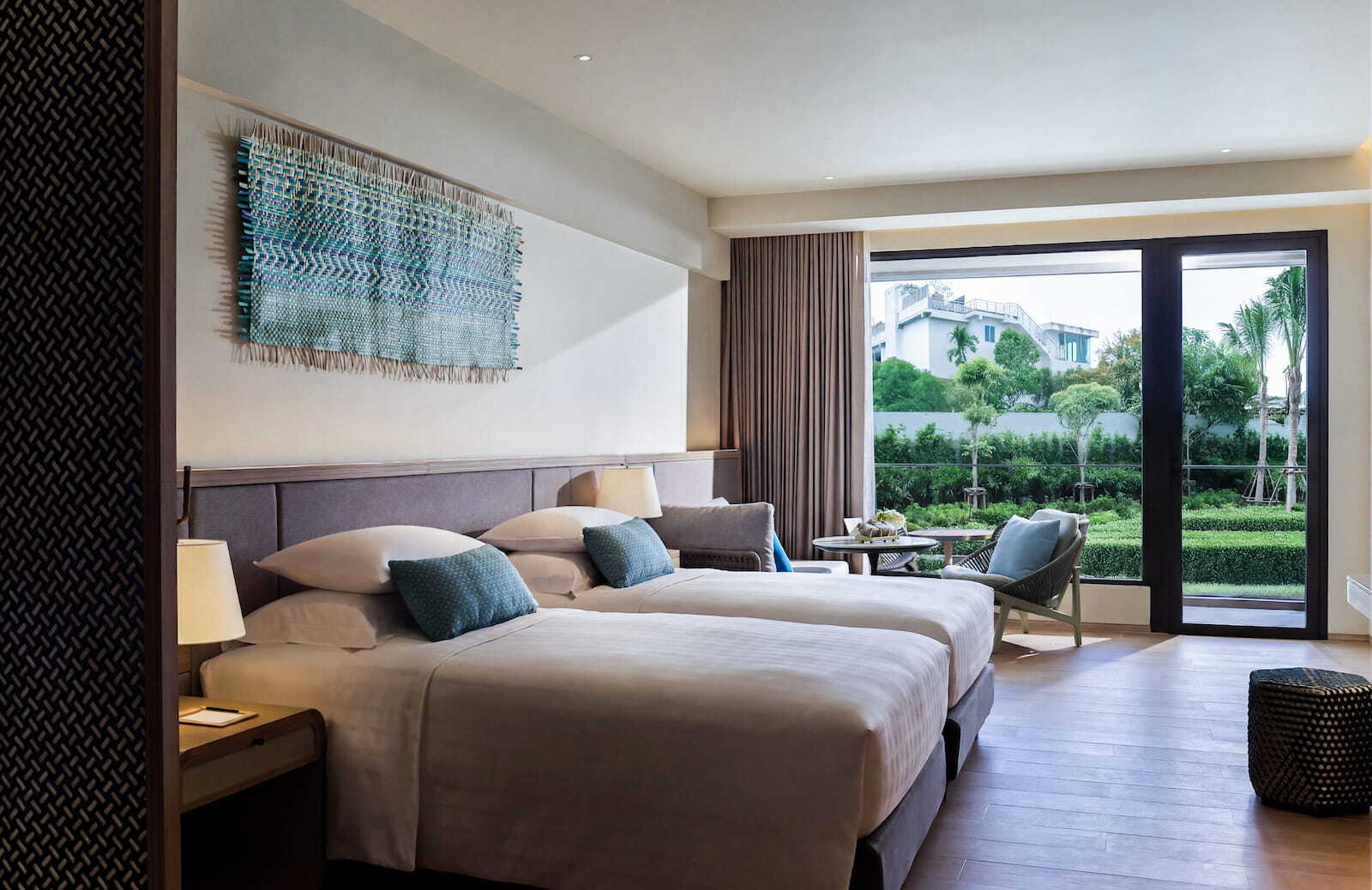
Staying where the spa is removes travel altogether. How you fill the rest of the day after your session is up to you. There are swimming pools and a fitness centre beside the spa, with yoga on the lawn and aqua aerobics through the week.
In the evening, AuJaan serves island heritage recipes by the lobby, Lamoon cooks over a wood-fired oven beside the beach, and Lamoon Beach Lounge turns to Indochina flavours at sunset. All of this is offered on the southern shore, away from the busiest parts of the island.
The spa team can talk through what suits you and find an hour that fits your week. There is nothing to decide before you arrive. Enquire with us to begin planning your rejuvenation at Chatrium Phuket Rawai.
References:
- Nuad Thai, traditional Thai massage. Retrieved 30 September 2026, from https://ich.unesco.org/en/RL/nuad-thai-traditional-thai-massage-01384
- Traditional Thai massage listed as an UNESCO 'intangible cultural heritage'. Retrieved 30 September 2026, from https://www.tatnews.org/2019/12/traditional-thai-massage-listed-as-an-unesco-intangible-cultural-heritage/
Frequently asked questions about Thai massage in Phuket (FAQs)
Q: What happens during a traditional Thai massage?
A: A session usually opens with a short consultation, then the therapist works through the body in sequence, generally starting at the feet. Expect rhythmic pressure and gentle stretches across the legs, arms, back and shoulders, with the therapist using hands, elbows, knees and feet. You stay clothed throughout, and the pressure can be adjusted at any point.
Q: How is Thai massage different from an oil or aromatherapy massage?
A: Thai massage uses pressure, stretching and assisted movement with no oils, and you stay dressed. Oil massage uses flowing strokes on bare skin for something softer. Aromatherapy massage adds scented essential oils to that. The practical difference is afterwards: oil massage tends to leave people drowsy, while Thai massage leaves most people looser and more awake.
Q: What should I know before booking a Thai massage in Phuket?
A: Wear loose, comfortable clothing, since you stay dressed. Avoid a heavy meal beforehand. Mention any injuries, recent surgery or pregnancy at the consultation so the therapist can adapt the session or suggest something else. Leave some time afterwards rather than moving straight into the next thing.
Q: Is traditional Thai massage painful?
A: It should not be. The pressure is firmer than an oil massage, and the stretches are more active, so it can feel intense in places, but it is adjustable throughout. Say something as soon as anything feels too firm, since therapists expect to adapt as the session goes.
Q: How long does a Thai massage in Phuket usually take?
A: An hour is the usual starting length, with 90 minutes and two hours common for a fuller session. Allow a little longer than the booking itself, for the consultation at the start and some unhurried time at the end.
